My Quick Kitchen Map
The first time my pot roast came out swimming in pink liquid, I blamed the cut of meat. Second time, I blamed the lid. Third time, I finally admitted the slow cooker sauce was too watery because of me — too much broth, a lid that never came off, and cornstarch stirred in at the start. Three fixes later, the sauce clung to the meat like it should.
Here's what I've learned from years of trial and error (plus a few professional chefs who were patient enough to explain the science).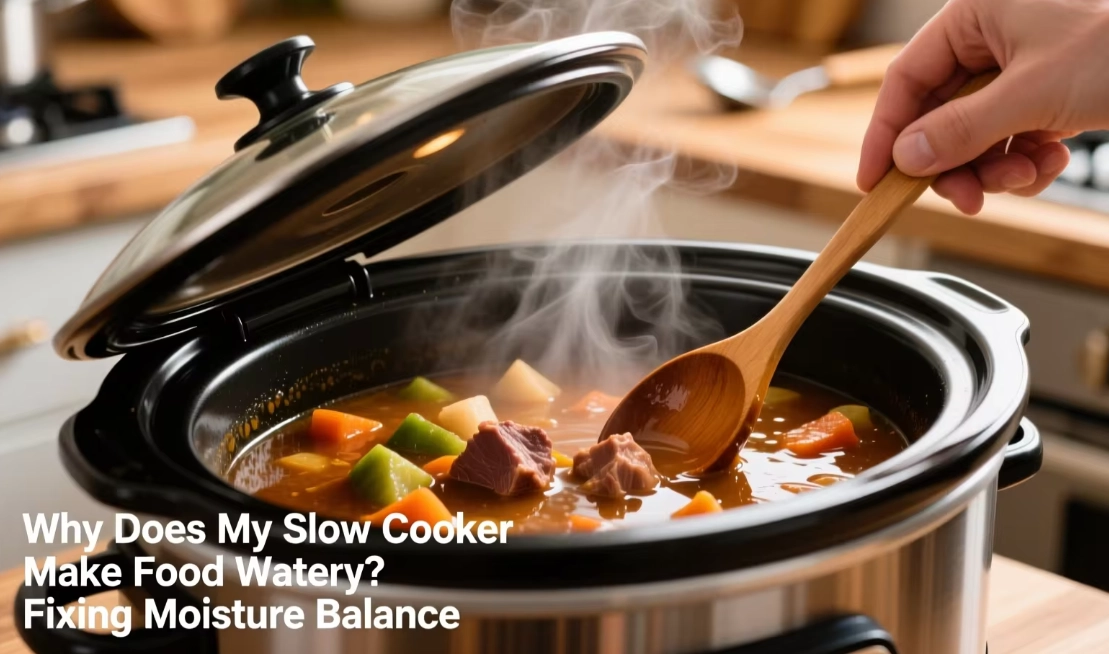
Why Your Slow Cooker Sauce Turns Watery
Slow cookers trap steam. That's the whole point. But trapped steam becomes condensed liquid that drips back into your sauce, and the meat itself keeps releasing juices for hours. A recipe written for a Dutch oven will almost always come out looser in a crockpot.
The four culprits I see most often:
- Starting liquid is already too high. Most recipes call for 1 to 2 cups. That's often 30 to 50 percent more than needed once meat renders its own juice.
- Lid lifted mid-cook. Every peek drops the internal temperature and adds back moisture from condensation on the lid. I used to stir every 90 minutes. Bad habit.
- Thickener added at the start. Cornstarch and flour break down after long heat exposure. They lose their thickening power by hour four.
- Fatty cuts with high water content. Chicken thighs, pork shoulder, and chuck all release more liquid than lean cuts. A chicken breast will give you a tighter sauce with the same recipe.
How to Thicken Slow Cooker Sauce Fast
You've already cooked. Sauce is thin. Here's the order I go in — fastest first, best texture last.
The Slurry Method (5 minutes)
Whisk one tablespoon cornstarch into two tablespoons cold water. Stir it in, turn the cooker to High, and leave the lid off for 10 to 15 minutes. Stir once gently. It thickens at about 195°F, so don't expect magic in two minutes. Cornstarch gives a glossy, slightly gelled texture. Some people dislike that. I think it works fine for Asian-style sauces but feels off in a beef stew.
The Reduction Method (20 to 30 minutes)
Take the lid off, set to High, and let it bubble down. This works beautifully for tomato-based sauces but will concentrate salt and spice. If your recipe called for a tablespoon of soy sauce, taste before you reduce too far. I lost a batch of pot roast this way — the sauce turned into a salt bomb.
The Fat-and-Flour Roux (10 minutes)
Melt two tablespoons butter in a pan, whisk in two tablespoons flour, cook for 90 seconds, then whisk the paste into the hot sauce. This is my go-to for anything creamy or gravy-like. It thickens without that glossy sheen. It also holds up if you're reheating leftovers the next day.
The Puree Trick (3 minutes)
Scoop out a cup of the vegetables and liquid, blend until smooth, and stir it back in. No starch, no flour. It works best with root vegetables, squash, or tomato-heavy sauces. I do this with a lentil stew that always turns out loose otherwise.
The Liquid Ratio I Use Every Time
Most slow cooker recipes overdo liquid. Here's the rough chart I keep taped inside a cabinet door. It's saved me more than any gadget.
| Dish Type | Liquid to Add (before cooking) | Why |
|---|---|---|
| Beef stew or pot roast | ½ to ¾ cup | Chuck releases a lot of juice |
| Chicken thighs (bone-in) | ½ cup | Skin and bone add moisture |
| Chicken breast | ¾ cup | Leaner cut, needs a bit more |
| Pork shoulder (pulled pork) | ¼ cup | Fat renders into liquid |
| Vegetable-only stew | 1 cup | Veggies absorb liquid |
| Tomato-based pasta sauce | ½ cup | Tomatoes are already 90% water |
One more tip: if the recipe says "add broth until the meat is halfway submerged," ignore that. I did this for years and always ended up with soup. Aim for one-third submerged instead.
Timing Mistakes That Water Down Sauce
Timing matters more than most people think. Here are the moves that have made the biggest difference for me.
Don't thicken at the start
Cornstarch, arrowroot, and flour all lose structure under prolonged heat. Add them in the last 20 to 30 minutes. I know some recipes tell you to dust the meat with flour before searing. That works, but the flour mostly browns on the surface and doesn't do much for the final sauce body.
Leave the lid alone
Every time I lift the lid, I lose about 15 minutes of cooking time and add back condensation. If you need to stir, do it fast and put the lid back. After hour three, I don't stir at all unless something smells like it's scorching.
Use the warm setting carefully
The warm setting on most slow cookers hovers around 165°F. That's not enough to evaporate liquid. If your sauce is watery and you switch to warm for two hours, it will stay watery. Keep it on Low with the lid cracked for real reduction.
Straight Answers to Common Questions
My sauce turned watery after I added frozen vegetables. What happened?
Frozen vegetables carry a surprising amount of surface ice. A cup of frozen peas can add two to three tablespoons of water once it melts. Next time, thaw and drain them first, or reduce your starting liquid by a quarter cup and add the vegetables in the last 30 minutes.
Can I just leave the lid off the whole cook time to prevent watery sauce?
That will dry out the meat and slow cooking dramatically. The lid-off method works for the final 20 to 30 minutes only. If you leave it off from the start, the top of the meat dries out and the bottom scorches. I've made that mistake exactly once.
Why did my sauce thicken in the pot but turn watery on the plate?
Starches set as they cool, but they also thin out when they're reheated or when they sit next to hot food that releases juice. If your sauce looks perfect in the pot and thin on the plate, add an extra half tablespoon of cornstarch slurry at the end and let it bubble for two minutes. Also, serve with a slotted spoon if you want the meat drier.
Does the slow cooker size affect how watery the sauce gets?
Yes, and this one surprised me. A 6-quart cooker filled halfway has far more air and surface area than a 3-quart cooker filled to the same level. More surface area means more evaporation, which means a tighter sauce. If you're using a big cooker with a small batch, cut your liquid by 20 percent or expect a looser result.
None of this is complicated once you know what's happening. Cut the liquid, hold the starch until the end, and keep the lid shut. The sauce will do what you want.
Share Your Thoughts