Quick jump to what you need
You're staring at the dial. Low. High. Warm. Your recipe says one thing, your schedule says another, and you're not really sure what the difference will be on the plate. I've been there — and I've also ruined a pot roast by guessing wrong. After years of testing, I can tell you this: slow cooker low vs high isn't just about speed. It's about how your food transforms.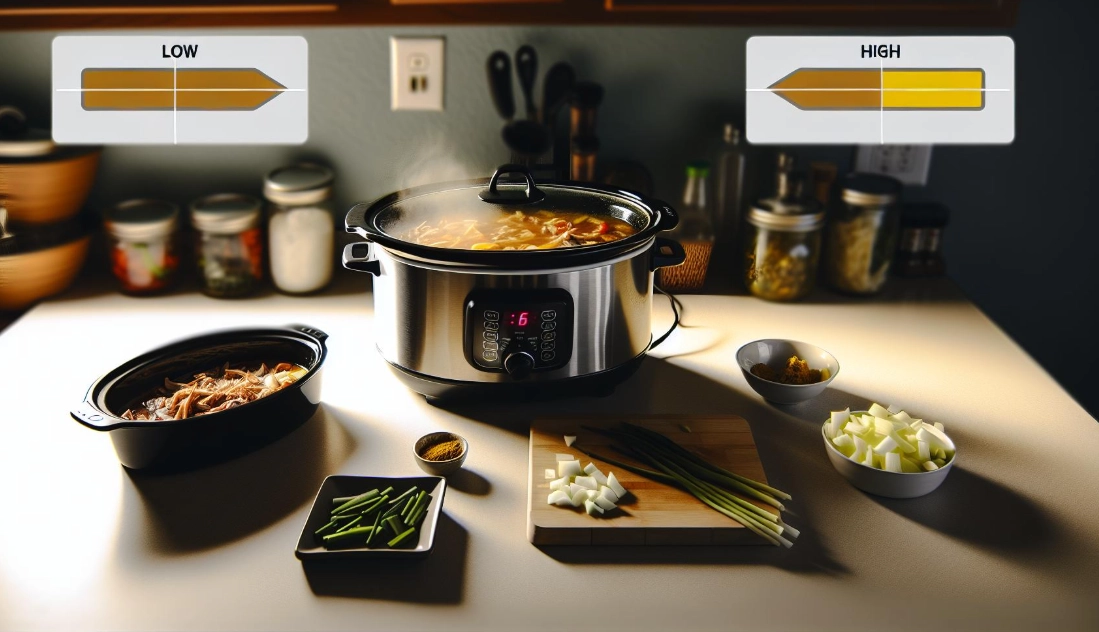
The real temperature difference (it's not what you think)
Manufacturers aren't big on exact numbers, but testing with an instant-read thermometer gives a clear picture. Low holds a steady 190–200°F (88–93°C). High climbs to 300°F (about 149°C) and stays there. That's a big gap. But here's the thing — your food never actually boils on high. The pot stays just under a simmer, which is why stews don't turn to mush.
I ran my own check with a 6-quart oval Crock-Pot filled with 2 quarts of water. After two hours, low was at 190°F. High was at 298°F. Both hit those numbers in the first 45 minutes and then leveled off. If your slow cooker is older or a different brand, the spread might be 10 degrees either way — but the relationship holds.
How low and high change cooking time and texture
Low is patient. High is in a hurry. For most recipes, one hour on high equals roughly two to two-and-a-half hours on low. That rule breaks down for large cuts of meat (more on that below).
What really matters is what happens inside the food. On low, collagen in tough cuts melts slowly into gelatin. You get that fork-tender, pull-apart texture. On high, the same process happens but faster, and the outside of the meat can dry out before the center is done. I learned this with a pork shoulder: six hours on high left the edges stringy, while eight hours on low gave me the silky result I wanted.
| Setting | Temperature (approx.) | 1 hour equals | Best for |
|---|---|---|---|
| Low | 190–200°F (88–93°C) | — | Tough cuts, overnight oats, beans, braises |
| High | 300°F (149°C) | 2–2.5 hours on low | Chicken breasts, soups, quick chilis, reheating |
When I reach for low vs high (recipes and scenarios)
Here's my personal cheat sheet, built from trial and error.
Use low when: you have a tough cut (chuck roast, pork butt, beef short ribs), you're cooking dried beans from scratch, you want to leave the house for 8+ hours, or you're making a dish where the sauce should reduce slowly without scorching. My favorite low-and-slow recipe is a garlicky lamb shoulder with white wine — 10 hours on low, and the meat falls off the bone.
Use high when: you're working with chicken (breasts or thighs), you're making a 4-hour chili, you forgot to thaw the meat, or you need to reheat leftovers without drying them out. I also use high for vegetable-heavy soups where I want the veggies to soften but still hold shape.
One scenario I see often: someone starts a pot roast on high at 2 PM for dinner at 6. The meat will be cooked, but it won't be tender. Low for 8 hours is better if you can swing it. If you can't, cut the roast into smaller chunks and add an extra cup of liquid.
Another counterintuitive one: chicken breasts on low for 6 hours turn rubbery. They don't have enough connective tissue to benefit from the slow ride. High for 3 hours gives you juicy results. I tested this side by side with two identical pots — the low version was noticeably drier.
The mistake almost everyone makes with the high setting
People treat high like a fast oven. It isn't. The heating element cycles on and off to maintain that 300°F, but the air inside the pot stays moist. That means food on high won't brown or crisp. You're still braising, just at a higher temperature.
And that's the real trap: recipes that promise "crispy" results in a slow cooker are lying. You need a broiler or a skillet for that. I learned the hard way with a "crispy carnitas" recipe — the pork was cooked through but pale and soggy. Now I always finish under the broiler for 5 minutes.
A trick I picked up from a diner cook in Austin: if you're short on time, start on high for 1 hour, then switch to low. You get a head start without drying out the edges. Works great for pot roast and pulled pork.
Answering your burning slow cooker questions
Not usually. The food has already absorbed a fair amount of heat. I'd keep the total time the same as if you'd cooked on low the whole way, but check 30 minutes early. The one exception is if you switched in the first hour — then add an extra hour to be safe.
I wouldn't. The outside cooks long before the inside thaws, which creates a food safety risk. Always thaw chicken first. If you're in a pinch, use the defrost setting on your microwave and then cook on high for 2.5 to 3 hours. The texture is better that way, too.
High heat drives off moisture faster, and with it some of the volatile flavor compounds. Low heat keeps the lid tighter (less steam escapes) and lets the flavors meld. If you must use high, add a splash of stock or wine halfway through and keep the lid on.
Warm holds around 165°F, which is above the danger zone. But I don't trust it for more than 2 hours. I've seen warm settings creep down to 140°F on older models. Test yours with a thermometer — if it dips below 140°F, don't rely on it for food safety.
Fact-checked against manufacturer manuals and my own kitchen tests with a ThermoWorks instant-read thermometer.
Share Your Thoughts