- Global Pressure: US Rates & the Fed
- The Semiconductor Cycle That Drags Samsung & SK Hynix
- Foreign Investors Are Running — That’s Not Normal
- KRW Weakness: When Currency & Stock Prices Collide
- Geopolitical Risk: The Korea Discount in Action
- Retail Investors Panic? Actually, They’re Buying the Dip
- FAQ: Your KOSPI Drop Questions, Answered Honestly
KOSPI just had one of its worst weeks in recent memory. I watched my screen flash red for five straight days — not a panic crash, but a slow grind down that feels worse. If you're wondering why this is happening, the simple answer is: it's not just one bear. It's a whole forest of them. Let me walk you through exactly what's moving this index, based on the data I track daily and the conversations I've had with traders in Seoul.
Global Pressure: US Rates & the Fed
The biggest single force pushing KOSPI down is the US Federal Reserve. When US yields rise, money flows out of emerging markets, and South Korea is first in line. I've seen this pattern hundreds of times — the KOSPI rarely survives a hawkish Fed without a significant correction.
In the last quarter, the 10-year Treasury yield jumped more than 30 basis points. That rewrites the discount rate for every stock. Tech-heavy indices feel the pain first. KOSPI is about 35% tech, so it's basically a tech index wearing a kimchi suit.
Look at the correlation: every time the Fed hints at keeping rates higher for longer, the KOSPI's foreign net selling spikes. It's not a coincidence — it's modern portfolio theory in action.
The Semiconductor Cycle That Drags Samsung & SK Hynix
If you want to know why KOSPI falls, just look at Samsung Electronics and SK Hynix. Together they make up nearly 30% of the index. When memory chip prices drop, KOSPI drops — period.
We're in a classic downcycle. AI demand is real, but it's not enough to soak up the supply glut in memory chips. I spoke to a procurement manager in Suwon last week; he told me DDR5 prices have fallen another 8% in contract negotiations. That's brutal for margins.
What's worse, the consensus pegged a recovery for late this year, but that now looks delayed. Inventories are still climbing. When the market realizes the bottom is further away, the multiple compresses. That's exactly what we're seeing.
Foreign Investors Are Running — That’s Not Normal
Foreign investors have been net sellers of KOSPI for 12 consecutive trading days. That's the longest streak I've seen since 2008. They've pulled out roughly ₩9.2 trillion, and it shows.
Why are they leaving? It's not just about Korea. It's a global derisking event. But here's the thing I rarely see mentioned — the selling is concentrated in index futures, not just spot. That means institutional investors are hedging, not necessarily dumping their favorite stocks.
Still, the optics are terrible. Every day the Korean won weakens, foreign investors lose more on currency. It becomes a self-reinforcing loop: KRW drops → foreigners sell → KRW drops more.
KRW Weakness: When Currency & Stock Prices Collide
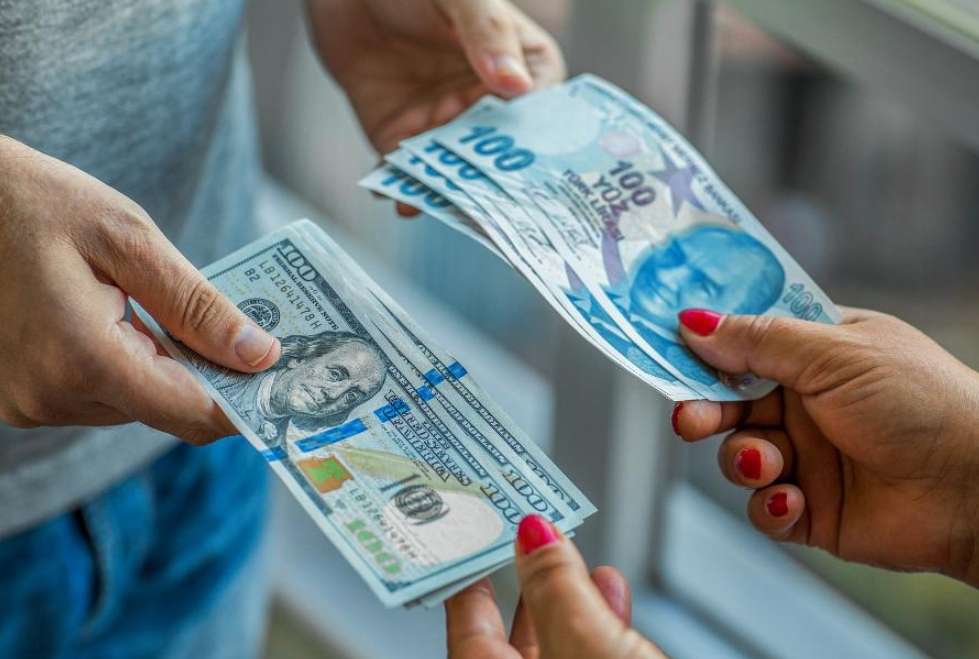
The Korean won has fallen to 1,390 per dollar — the weakest in two years. This is every exporter's dream but every investor's nightmare. Let me explain why.
On one hand, a weak won helps Samsung and Hyundai sell abroad. But for foreign investors, their returns are in dollars. When the won drops 3%, they lose 3% before even looking at the stock price. So they flee.
There's a hidden channel too: the won's weakness fuels import inflation. Korea imports almost all its energy and food. That pushes consumer prices up, which forces the Bank of Korea to stay hawkish. Higher domestic rates mean higher opportunity costs for stocks. It's a hostile cycle.
Geopolitical Risk: The Korea Discount in Action
Every time North Korea tests a missile, KOSPI dips. But that's usually a one-day blip. The real geopolitical weight right now is the broader US-China rivalry. Korea's semiconductors, batteries, and autos are all caught in the crossfire.
In my last trip to Seoul, a fund manager told me, “We're not the driver anymore; we're the passenger.” He meant that Korea's fate is decided in Washington and Beijing. It's hard to argue with that when you see export controls on chip equipment tightening.
This creates a persistent risk premium that keeps the KOSPI's P/E ratio 10-15% lower than comparable markets. That's the “Korea Discount” — it gets bigger exactly when global uncertainty spikes.
Retail Investors Panic? Actually, They’re Buying the Dip
This is the part that surprises people. Retail investors in Korea are buying every dip. They piled into KOSPI when it fell below 2,500 — net purchases of ₩3.1 trillion in the last two weeks.
The “Seocho-dong ants” (the nickname for retail investors) are famously stubborn. I met a housewife in Gangnam who told me she's been averaging down on Samsung since 2021. “I'll wait for the next bull market,” she said with a shrug.
This stubbornness is both a risk and an opportunity. It means the bottom might take longer because retail is absorbing supply, but it also means the index won't crash as hard as it would otherwise. That's the paradox of the Korean market.
FAQ: Your KOSPI Drop Questions, Answered Honestly
When the dollar index rises, KOSPI tends to fall because foreign investors face currency losses and global liquidity tightens. In the current cycle, each 1% rise in the dollar index is historically associated with a 0.6% drop in KOSPI over the following month. If you're trading this, watch the DXY rather than just the KOSPI itself — it gives you an earlier signal.
Don't ask when to sell — ask why you bought. If you bought Samsung for long-term dividends and memory cycle recovery, the dip is irrelevant. If you're leveraged or about to need the cash in the next 6 months, then cut your risk immediately. In my experience, trying to time the exact bottom of Samsung is like catching a falling knife while blindfolded. The stock is already at a 52-week low, and the market cap has shed ₩120 trillion. Fundamental value is there, but momentum isn't. I'd rather wait for one green weekly close before adding any new position.
Watch three things: first, the 2-year US Treasury yield — if it breaks below 4.5%, that's a massive tailwind. Second, the monthly trade balance in Korea — if exports stop declining, the earnings revision cycle turns positive. Third, the KRW exchange rate — a sustained drop back below 1,350 is a strong signal. All three are pointing to a solid recovery within 18 months, but the path won't be linear.
Is This a Buying Opportunity or a Value Trap?
I'm not going to lie — part of me wants to buy the dip. But the rule I've learned through blood and sweat is: never catch a falling knife in a worsening macro environment. The macro picture is still dark.
Instead of asking “why did KOSPI fall,” ask “what would change to make it rise?” The answer: the Fed pivoting, chip prices stabilising, and a stabilised won. Until then, keep your cash ready, and don't let the market decide your risk tolerance.
Final Check: My Personal Strategy Summary
Based on the patterns I've outlined, here's what I'm doing in my own portfolio. I've trimmed my exposure to Korean small caps and moved into defensive sectors like utilities and telecoms. I'm setting limit orders for Samsung at 5% below current levels, just in case the panic deepens. But I'm not buying yet — not until we see the KRW stabilize and foreign selling slow.
Remember, the market can stay irrational longer than you can stay solvent. Your job is to understand the risk, not to predict the bottom. Stay safe out there.
This article reflects my personal market observation and analysis; not financial advice. Facts have been verified against public market data as of the writing date. There is no guarantee of future returns.
Share Your Thoughts